
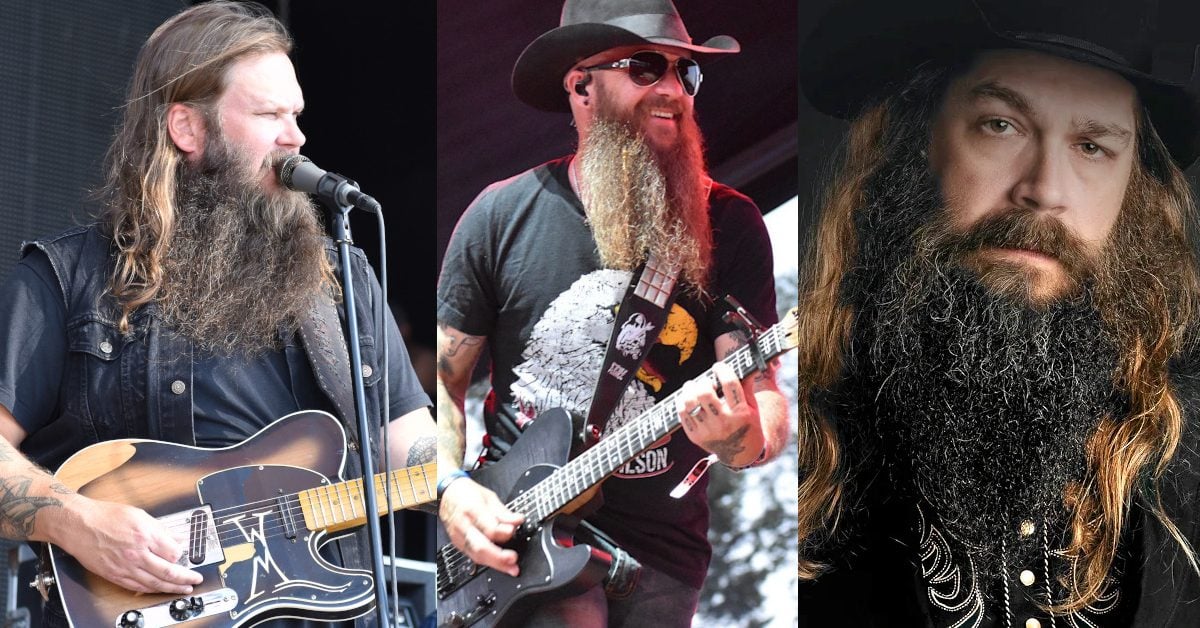
CODY JINKS CALLS OUT BILLBOARD—WHO REALLY DESERVES THE NAME "OUTLAW" IN TODAY'S COUNTRY MUSIC?
There are few labels in country music as powerful—and as misunderstood—as the word "Outlaw." It carries with it an entire legacy of independence, rebellion, and artistic truth. But in recent weeks, that word has once again sparked debate, after Cody Jinks openly challenged a list published by Billboard, questioning who truly deserves to carry that title in today's music landscape.
At the heart of the controversy lies a deeper issue—what does it really mean to be an "Outlaw" in country music today?
The discussion began when Billboard released a feature reflecting on the Outlaw movement, tying it to two major milestones: the anniversary of the legendary compilation Wanted: The Outlaws and the debut of the documentary They Called Us Outlaws. In the article, several modern artists were described as carrying forward the outlaw spirit, including names like Jason Aldean, Luke Combs, and Zach Bryan.
But for Cody Jinks, that interpretation missed something essential.
In a candid and direct response, Jinks made it clear that while he respects those artists, he does not consider them "Outlaws." His reasoning was simple, yet powerful: true Outlaw country is not just about sound or attitude—it is about independence from the system itself.
According to Jinks, many of the artists listed are still operating within major label structures—systems that shape decisions, control releases, and influence creative direction. In contrast, the original Outlaw movement, led by figures like Waylon Jennings and Willie Nelson, was defined by a refusal to be controlled.
That distinction matters.
Because for Jinks and many others in the modern independent scene, being an Outlaw is not just about image or branding—it is about creative freedom, self-determination, and a willingness to stand outside the mainstream.
And this is where the conversation becomes more complex.
Jinks pointed out that there is, in fact, a thriving modern Outlaw scene—one that exists largely outside of mainstream attention. Artists like Whitey Morgan, Ward Davis, and Kelsey Waldon are keeping that spirit alive, both musically and philosophically.
These artists may not dominate radio playlists or major award shows, but they represent something closer to the original Outlaw ethos—a commitment to authenticity over accessibility, and truth over trend.
What makes this debate especially significant is that it highlights a broader issue within the music industry: the gap between mainstream recognition and grassroots reality.
Writers and publications, even highly respected ones, can sometimes operate within a limited perspective—focused on chart success, major labels, and widely visible names. But beyond that spotlight, there are entire communities of artists building careers on their own terms, often without the same level of visibility.
That doesn't make them less important.
If anything, it makes their role even more vital.
There is also the question of whether the term "Outlaw" itself can—or should—be applied to modern artists at all. As Jinks himself suggested, "there are not any new outlaws," only a distinction between signed and independent musicians. It's a statement that challenges not just Billboard's list, but the very idea of labeling artists in this way.
Even within the upcoming documentary They Called Us Outlaws, the definition remains fluid. Director Eric Geadelmann has emphasized that the project is less about assigning labels and more about exploring what it means to be an artist who follows their own path.
And perhaps that is the most important takeaway.
Because the Outlaw movement was never meant to be neatly defined. It was messy, personal, and deeply rooted in individual expression. It was about pushing back—not for the sake of rebellion alone, but in pursuit of something more honest and more real.
Still, as Jinks and others have pointed out, it matters who gets included in these conversations. When modern artists who embody that spirit are overlooked, it risks rewriting the narrative—shifting the meaning of "Outlaw" away from its roots.
In the end, this debate is not about discrediting any artist. It is about preserving the integrity of a legacy—one built by those who chose independence when it was not the easy path.
And as long as that legacy continues to inspire new voices, the question will remain:
Who truly carries the Outlaw spirit today—and are we listening closely enough to hear them?